bulgogi.ai

Beef cuts for Korean BBQ

English and Korean names, primals, and tabletop notes. Pop-art plates of each cut — the same comic style as the journal.

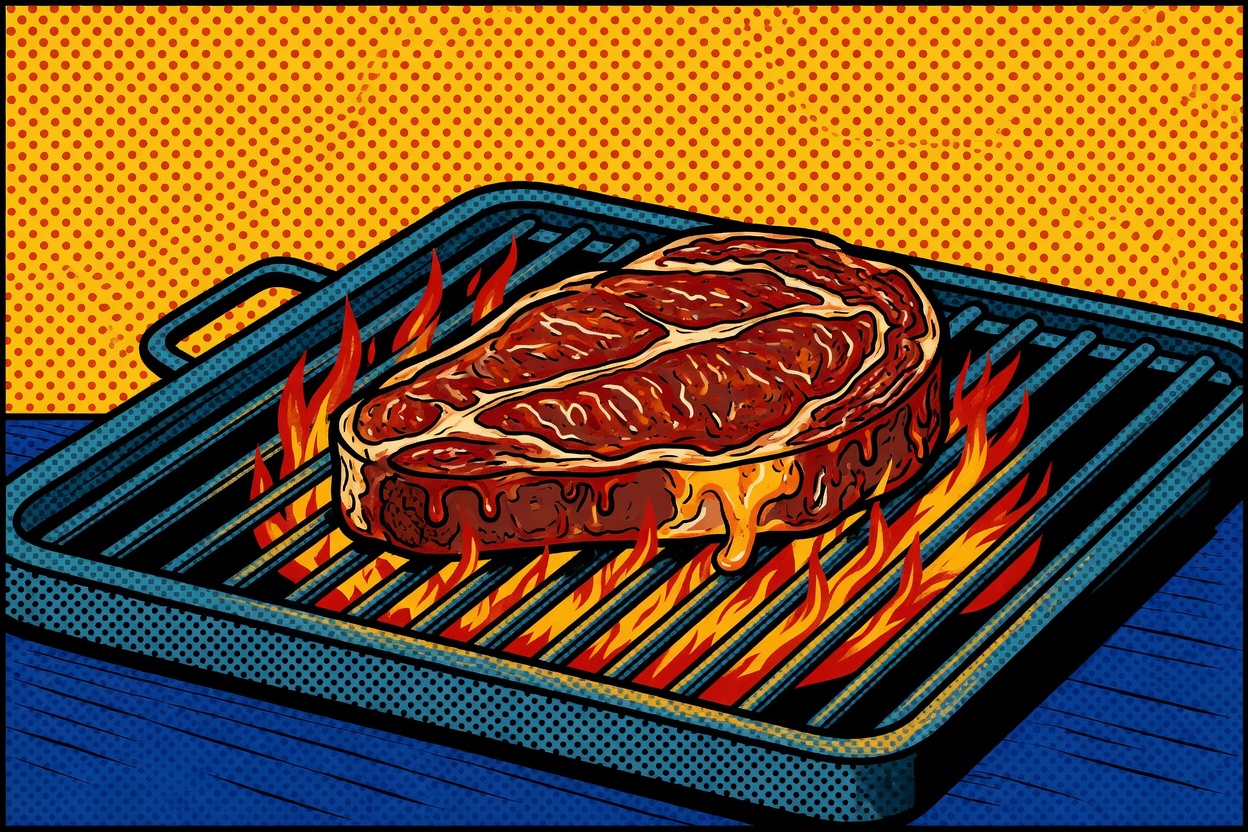
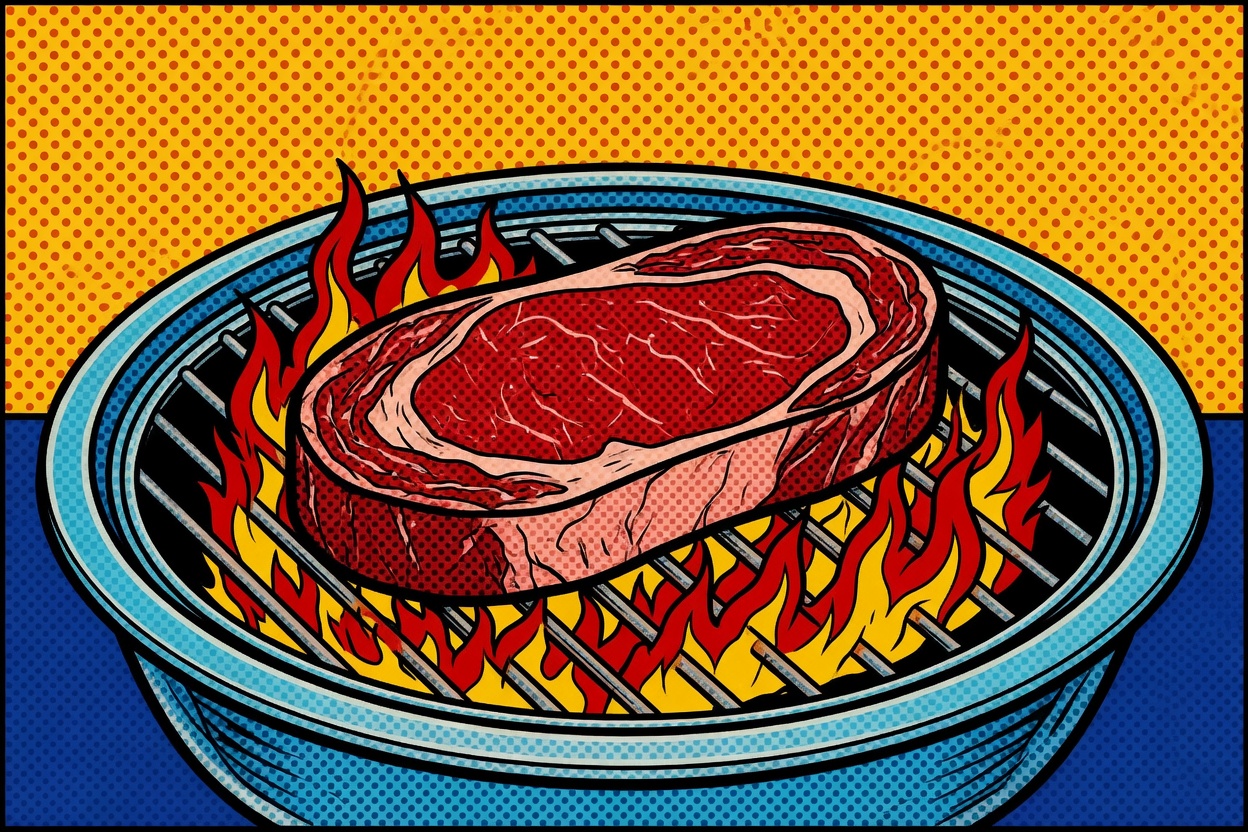
Ribeye sketch

Ribeye

등심 deungsim · 꽃등심 kkotdeungsim

The cut most people mean when they say “steakhouse KBBQ.” Flower loin (kkotdeungsim) is the heavily marbled section Korean butchers highlight.

Primal
Rib primal (longissimus dorsi, spinalis cap)
Best method
High-heat tabletop charcoal or cast-iron sear
Flavor
Rich, juicy, full beef flavor
KBBQ prep
Usually unmarinated; thick or bite-size pieces
Marbling
Naturally high marbling — the classic steakhouse showpiece
Tenderness
Intermediate to tender (cap is especially soft)
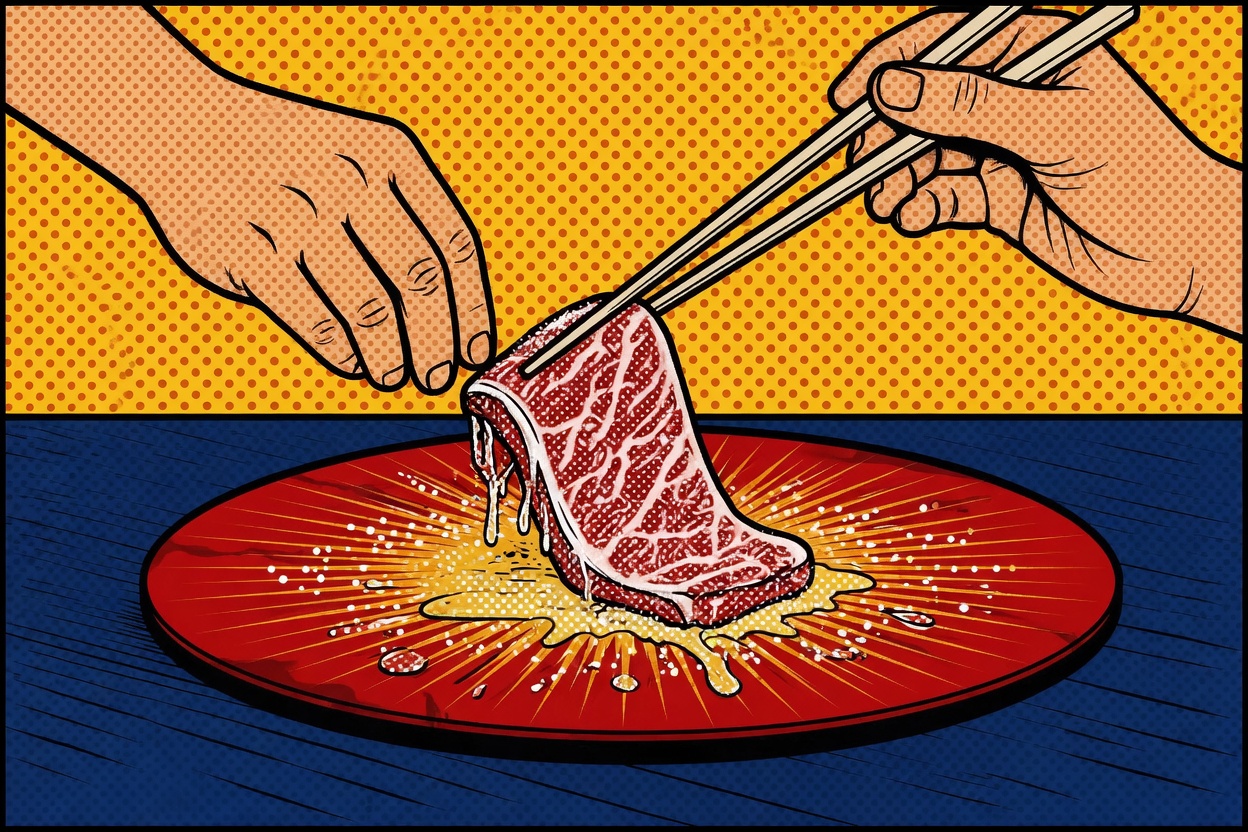
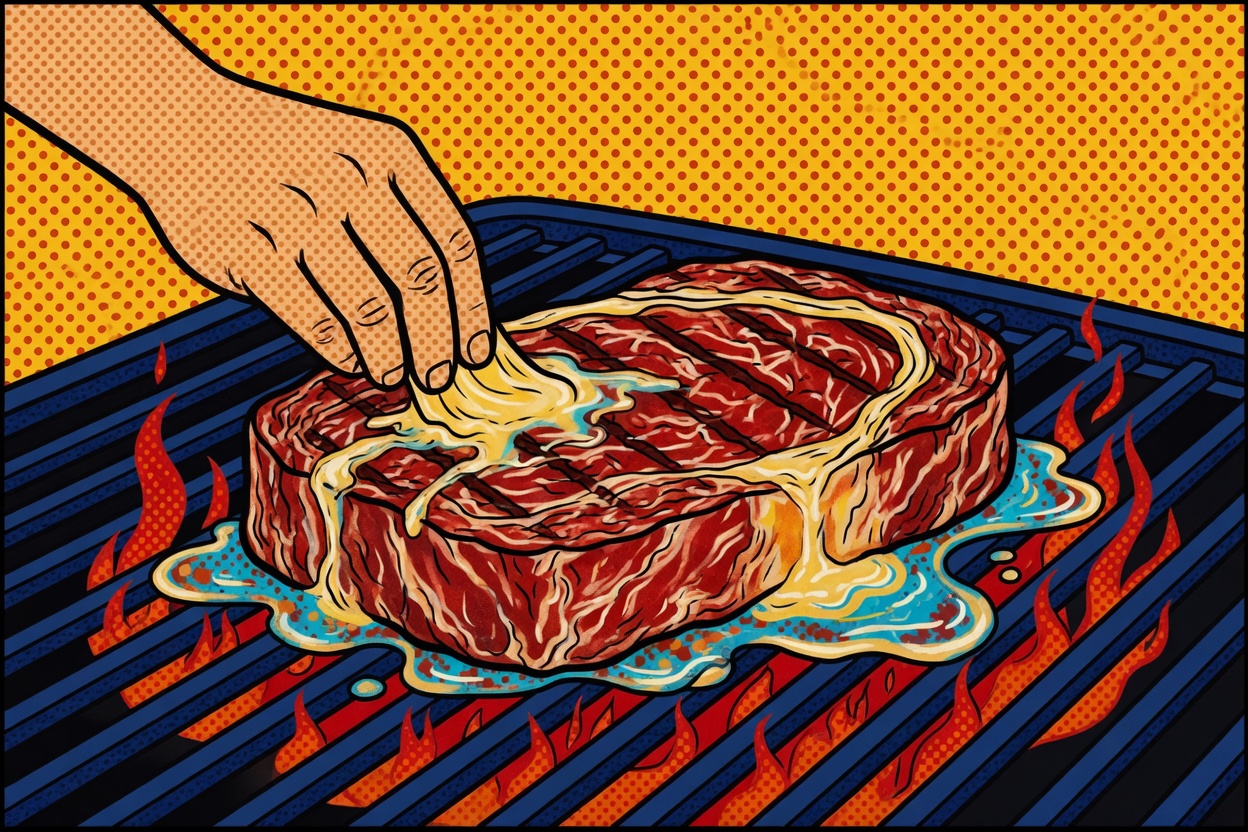
Wagyu A5 sketch

Wagyu A5

와규 A5 · 일본 최고 등급

A5 is yield letter A plus quality grade 5 on the Japanese scale — not a cut name, but a marbling league. Sold by the ounce because richness saturates quickly.

Primal
Typically loin / ribeye (longissimus) from Japanese graded carcasses
Best method
Brief high heat; small portions only
Flavor
Sweet, buttery fat; satiety hits fast
KBBQ prep
Slice thin; never overcook; rice and greens nearby
Marbling
BMS 8–12 — extreme intramuscular fat web
Tenderness
Luxury melt rather than classic steak chew
Wagyu (American / Crossbred) sketch

Wagyu (American / Crossbred)

와규 · 아메리칸 와규

“Wagyu” on U.S. menus often means American Wagyu genetics (crossbred or fullblood). Expect more marbling than Prime, at a friendlier price-per-bite than A5 ounces.

Primal
Usually ribeye, strip, or chuck specialties from F1–fullblood programs
Best method
Hot sear or tabletop; slightly thicker than A5 slices
Flavor
Rich beef with more structure than pure A5 melt
KBBQ prep
Great share plate between Prime volume and A5 punctuation
Marbling
Abundant, but usually less dense than Japanese A5
Tenderness
Very tender when not cooked past medium
Filet Mignon sketch

Filet Mignon

안심 ansim / anshim

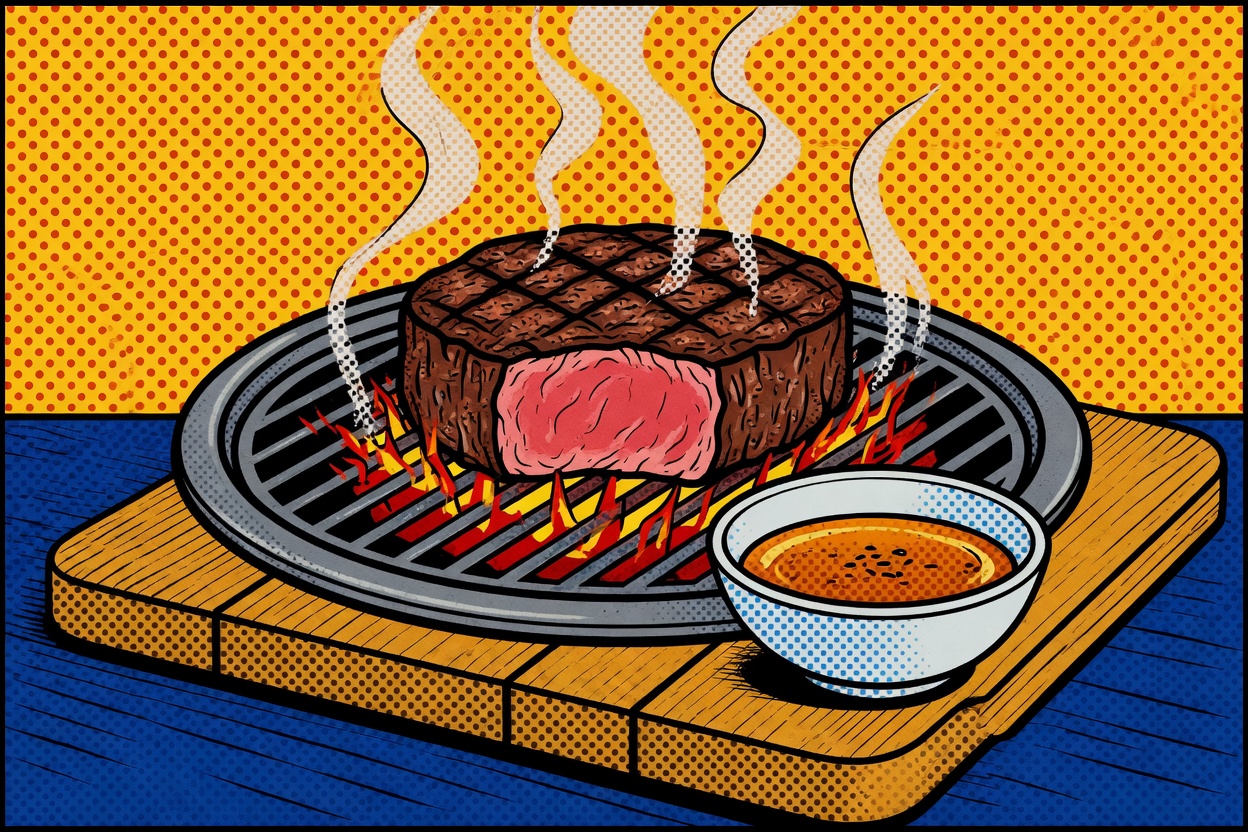
Korean steakhouses list ansim as the soft, lean counterpoint to ribeye. Order it when you want texture more than marbling fireworks.

Primal
Tenderloin (psoas major) — least-worked loin muscle
Best method
High heat, quick; whole roast as Chateaubriand
Flavor
Mild beef — pair with sauces, ssam, or salted fat
KBBQ prep
Bite-size pieces; avoid paper-thin or it dries out
Marbling
Low; mild flavor without a fat cap story
Tenderness
Most tender muscle in classic shear rankings
Bone-in Galbi sketch

Bone-in Galbi

갈비 galbi / 양념갈비 yangnyeom-galbi

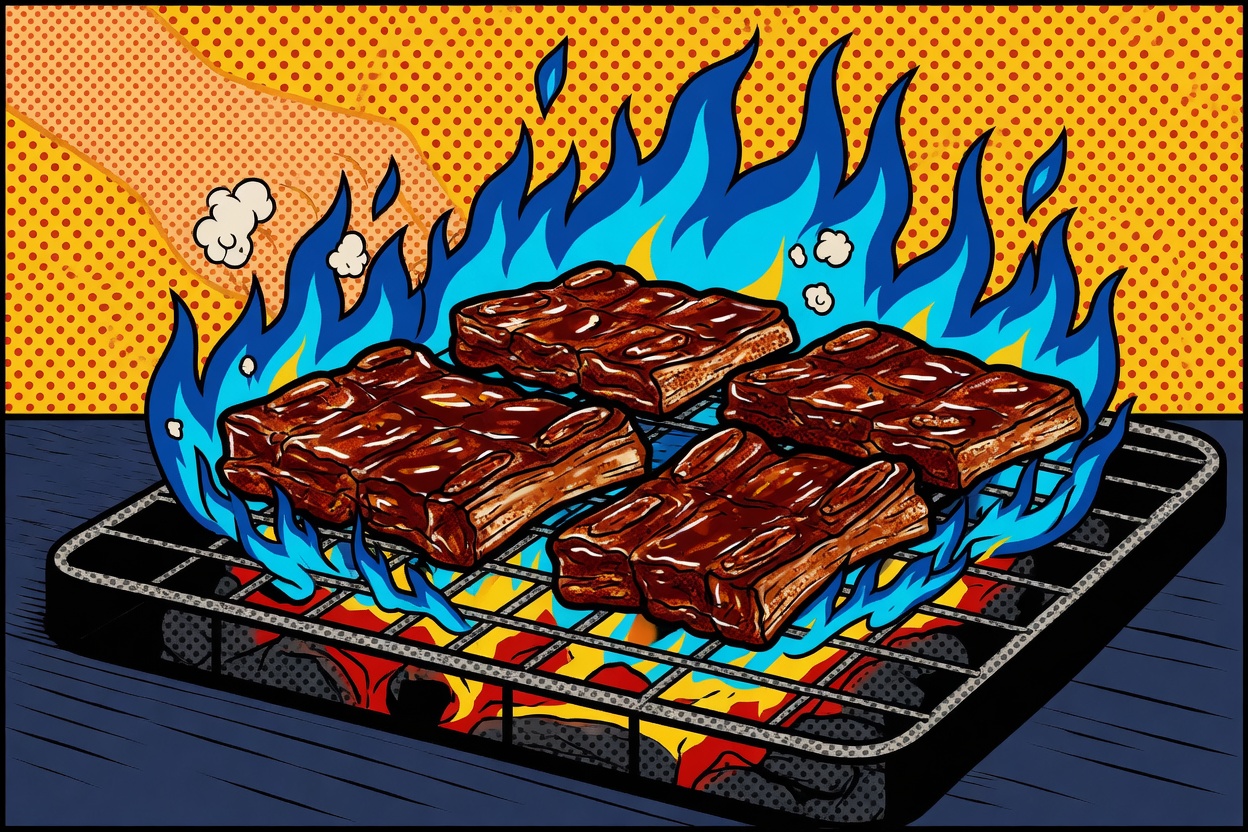
Traditional galbi is the celebratory cut: scored, marinated, and grilled until glossy. Grill plain cuts before sugar-heavy marinades to protect the grate.

Primal
Short rib, traditional Korean cut
Best method
Charcoal or gas tabletop; re-brush marinade carefully
Flavor
Smoky-sweet when grilled well
KBBQ prep
Score surface; Korean pear in marinade; refresh the grate when charred
Marbling
High-fat group; marinades common
Tenderness
Serratus ventralis ranks tender among beef muscles
LA Galbi sketch

LA Galbi

LA갈비 LA-galbi

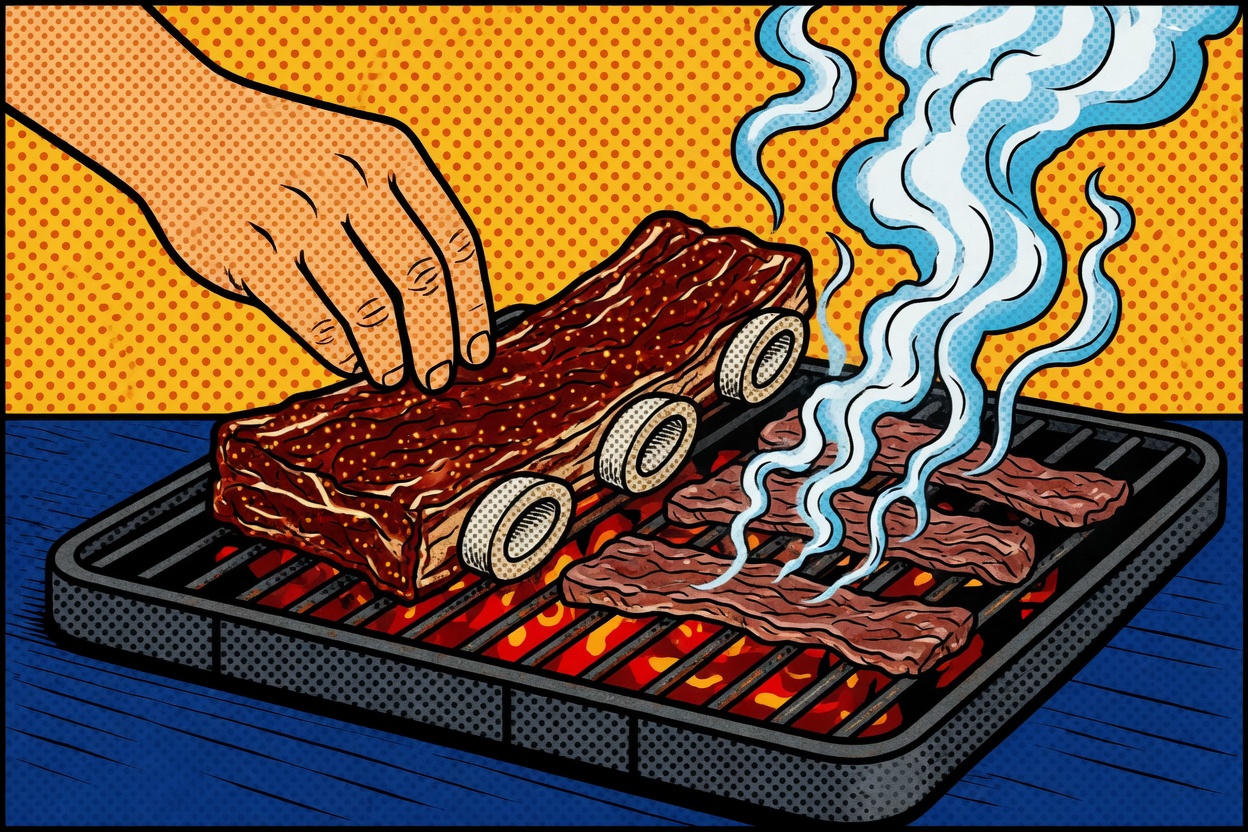
Named for Los Angeles Korean butcher practice: whole racks sliced thin across the bones so bone “coins” peek along the edge.

Primal
Flanken-cut short rib across the bones
Best method
Fast high-heat tabletop grilling
Flavor
Sweet-savory soy-garlic profile when marinated
KBBQ prep
Cross-cut for tenderness; sugar burns — watch the grate
Marbling
Depends on rib section; marinade carries sweetness
Tenderness
Thin cross-grain cut makes it eat tender
Brisket sketch

Brisket

양지 yangji · point & flat

Brisket is a choose-your-own-adventure primal: smoke the packer for hours, or ask for chadolbaegi paper-thin slices that crisp in seconds on the table grill.

Primal
Brisket primal — breast; point (fattier) and flat (leaner)
Best method
Tabletop paper-thin (chadol) or low-and-slow smoke/braise
Flavor
Deep beef; Texas bark vs Korean grate-seasoning richness
KBBQ prep
Same primal, opposite geometries — thickness decides the method
Marbling
Point is fattier; flat is leaner and denser
Tenderness
Tough whole; tender when sliced thin or smoked for hours
Chadolbaegi sketch

Chadolbaegi

차돌박이 chadolbaegi

The classic opening cut: seasons the grill, resets the palate, and proves why geometry (1–2 mm slices) beats low-and-slow for this primal at the table.

Primal
Brisket point, paper-thin sliced
Best method
Seconds on a ripping-hot plate; eat while edges crisp
Flavor
Deep richness; often the first cut of the meal
KBBQ prep
Unmarinated; sesame oil–salt–pepper dip
Marbling
Dense fat seams — richness without thick marbling flecks
Tenderness
Whole muscle is tough; thin slice is the tenderizing trick
Hanger Steak sketch

Hanger Steak

토시살 tosisal

Only one hanger (sometimes misspelled “hangar”) per animal. Korean steakhouses treat tosisal as a specialty — deep flavor without A5 price tags.

Primal
Hanging tender / diaphragm support muscle
Best method
Direct fire; stop at medium-rare
Flavor
Concentrated beefy, almost organ-adjacent
KBBQ prep
Cook thicker, then slice for sharing
Marbling
Some marbling; membrane must come off first
Tenderness
Tender if not overcooked; tightens past medium
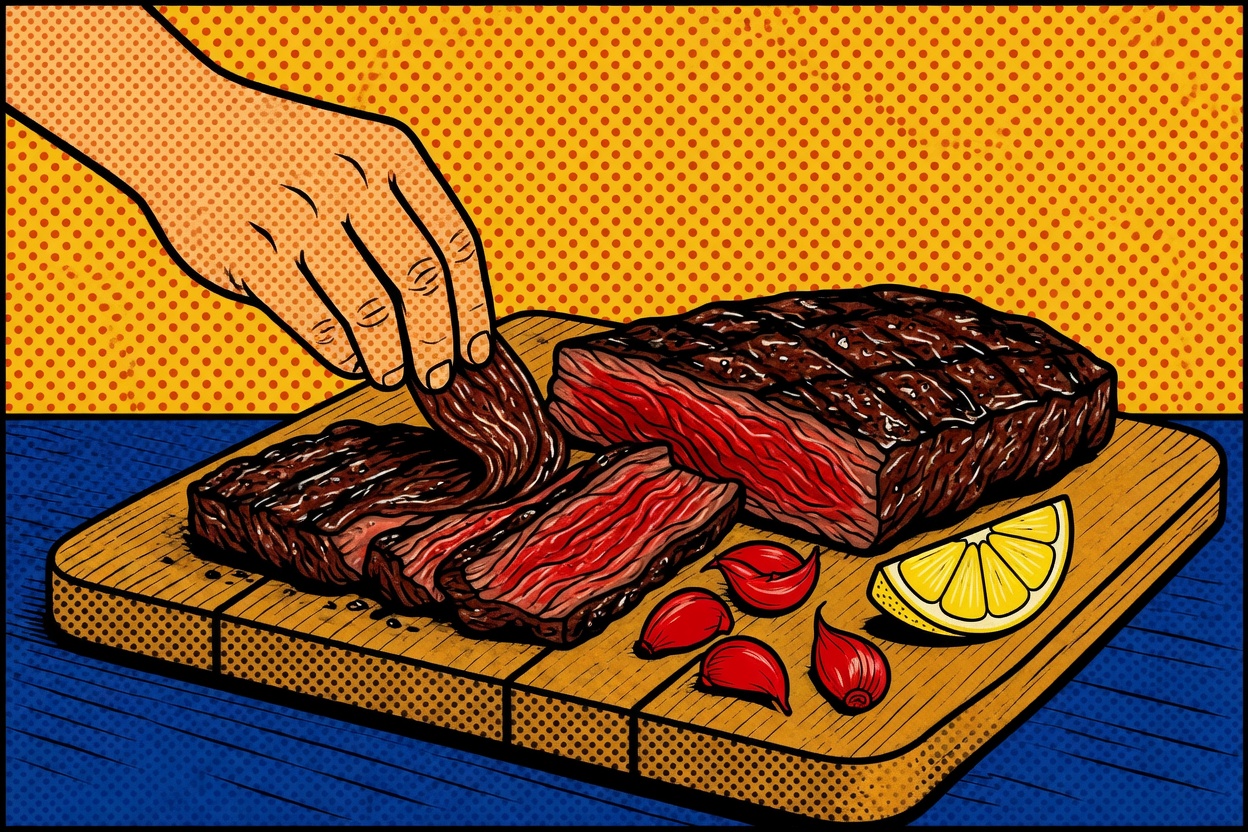
Flank Steak sketch

Flank Steak

플랭크 · 치마살 family (related belly/flank zone)

Flank is a long-grain cut that rewards a sharp knife. Marinate, sear hard, and carve thin across the grain for weeknight KBBQ energy without short-rib prices.

Primal
Flank (abdominal), long grain running lengthwise
Best method
Hot grill, medium-rare; always slice against the grain
Flavor
Bold beef, great for bulgogi-style marinades
KBBQ prep
Not always on classic tabletop menus; common at home and fusion spots
Marbling
Moderate; benefits from marinade
Tenderness
Medium — grain direction is everything
Flat Iron sketch

Flat Iron

부채살 buchaesal

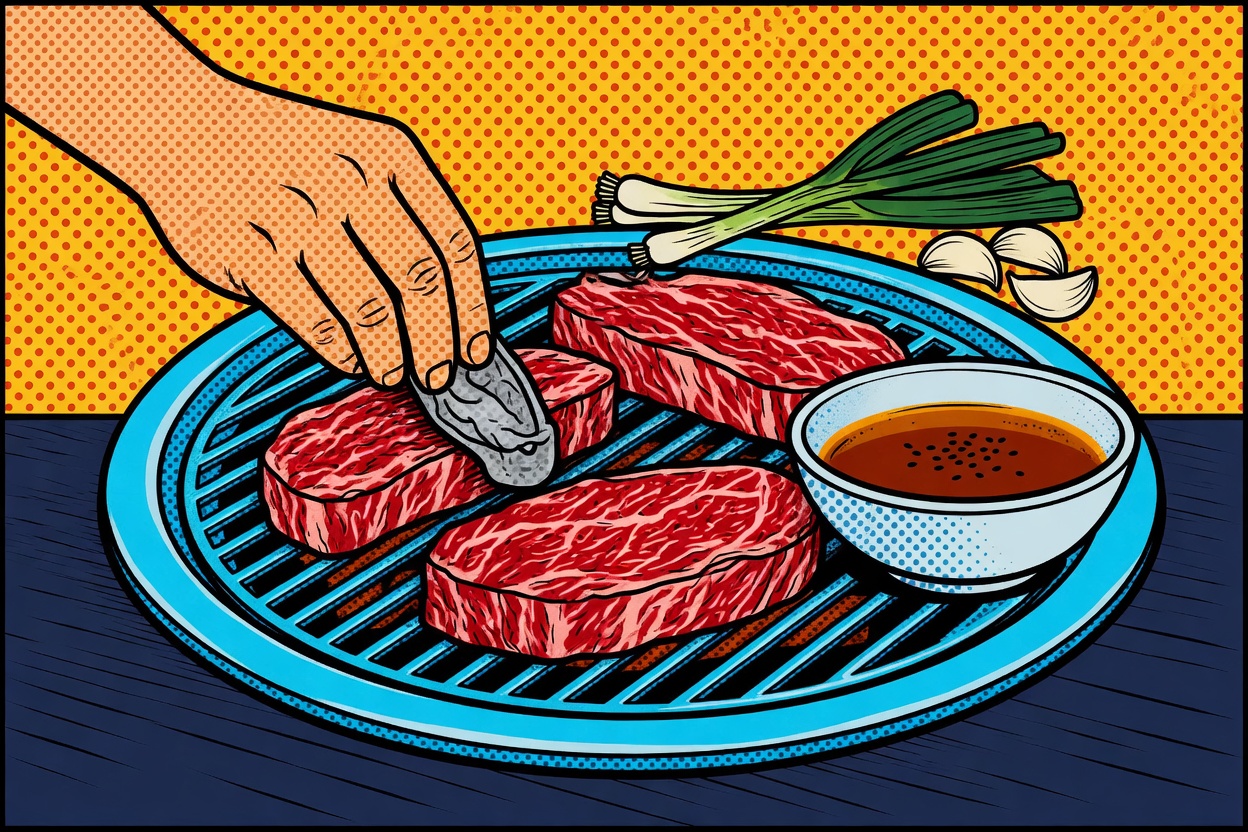
Buchaesal (“fan meat”) is the smart order: steak-like satisfaction without tenderloin prices. Remove the central seam if your butcher left it.

Primal
Infraspinatus (shoulder blade), deseamed
Best method
Tabletop grill or brief reverse sear
Flavor
Rich chuck-primal beefiness
KBBQ prep
Also used marinated for bulgogi-style service
Marbling
Medium fat; strong beef for the price
Tenderness
Second-most tender muscle in classic rankings (after tenderloin)
Outside Skirt sketch

Outside Skirt

안창살 anchangsal

Anchangsal is the flavor bomb of the neighborhood table: not as buttery as ribeye, but louder. Pull medium-rare and slice thin.

Primal
Diaphragm / short plate skirt
Best method
Marinate optional; sear 2–3 minutes per side; slice on a bias
Flavor
One of the beefiest tastes on the animal
KBBQ prep
Premium because yield is tiny per cow
Marbling
Light flecks; membrane removed for a cleaner bite
Tenderness
Flavor-first; slice across the grain at 45°
Salchisal (Zabuton) sketch

Salchisal (Zabuton)

살치살 salchisal

Japan calls it zabuton (cushion). In Korea, top-grade salchisal is a destination order — dense marbling without needing A5 branding.

Primal
Chuck flap / serratus anterior “cushion”
Best method
Grill immediately as a thin steak
Flavor
Juicy, savory fat; a luxury tabletop cut
KBBQ prep
Small portions; eat hot off the grate
Marbling
Excellent — shimofuri web in high grades
Tenderness
Very tender; scarce (only a few kg per cow)
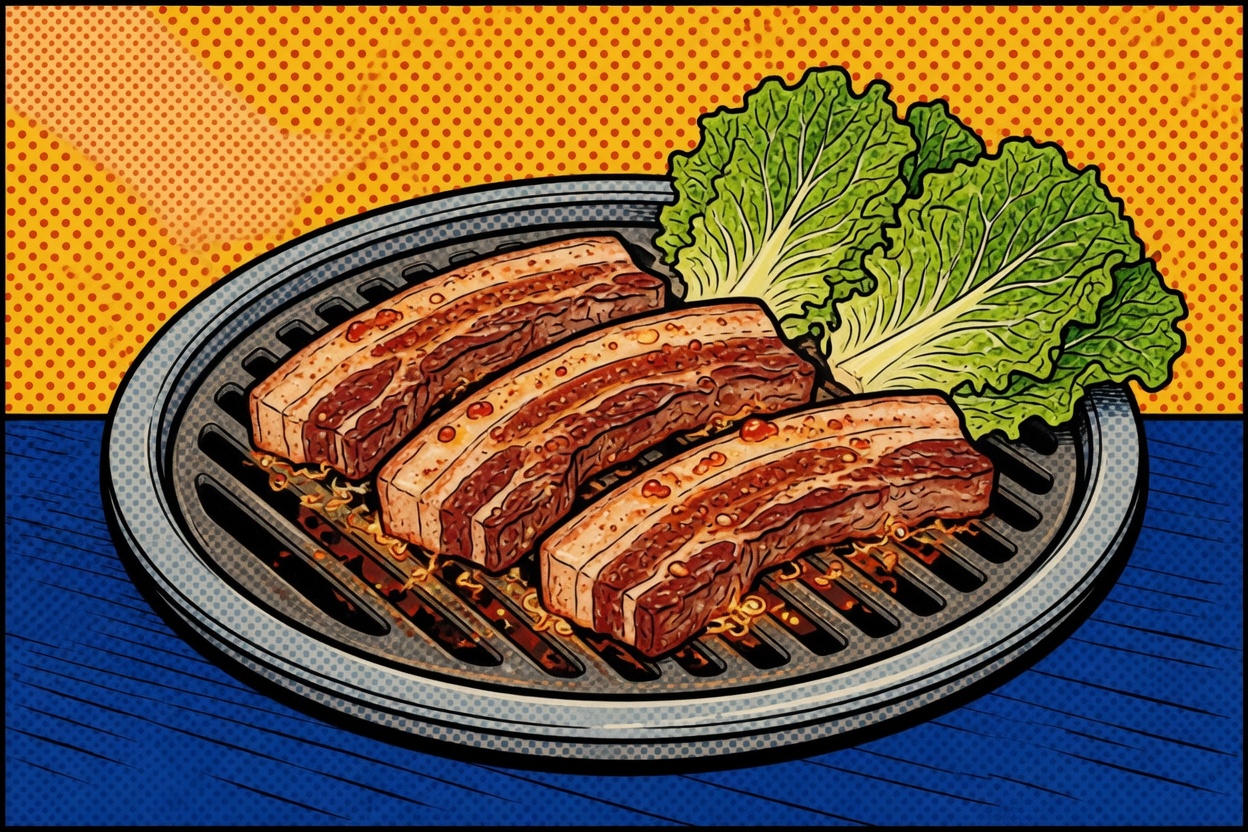
Pork Belly sketch

Pork Belly

삼겹살 samgyeopsal

Samgyeopsal is the social cut of Korean BBQ: thick belly strips, shared tongs, lettuce wraps. Beef may headline steakhouses, but belly still runs the neighborhood table.

Primal
Belly — layered skin, fat, and lean (three-layer namesake)
Best method
Tabletop grill until edges blister; not rushed
Flavor
Pork richness; classic with ssam, ssamjang, raw garlic
KBBQ prep
Often the group’s default order; thick slices preferred
Marbling
Fat is the story — thick seams between lean
Tenderness
Tender when fat renders; chewy if undercooked