SCIENCE · 2026-08-01
The Science of Grilling: Why Fat Makes Meat Taste Better
By Bulgogi Curator
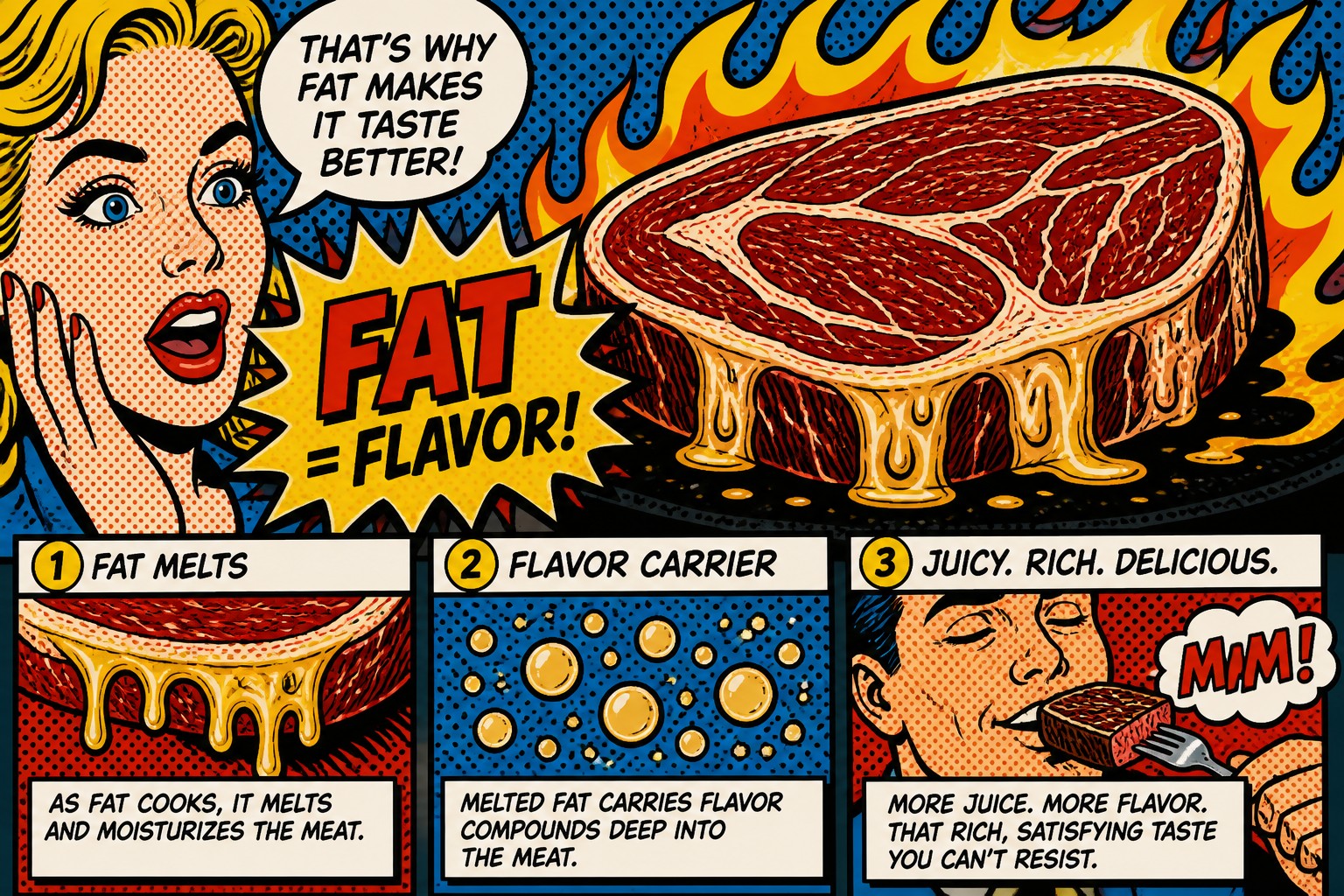
Marbling isn’t just pretty — intramuscular fat carries aroma, lubricates muscle fibers, and drives the juiciness you actually taste at the table.
TL;DR
Marbling isn’t just pretty — intramuscular fat carries aroma, lubricates muscle fibers, and drives the juiciness you actually taste at the table.
When a ribeye hits a hot tabletop grill, the first thing you smell is not “protein.” It is fat melting into aroma compounds and browning at the surface. That is why marbling — intramuscular fat, not just the fat cap on the edge — shows up in every serious Korean BBQ conversation.
Fat acts as a solvent for flavor. Many of the compounds that make beef taste like beef dissolve better in fat than in water. As marbling softens over heat, those compounds coat your palate. Muscle fibers also slide more easily when lubricated, so the same chew feels juicier even if absolute water content is similar.
Water and fat are different kinds of juiciness. A lean tenderloin can still be tender, but it often reads drier because there is less melting fat mid-bite. High-marbling cuts (kkotdeungsim, salchisal, well-graded ribeye) keep delivering richness after the first second on the tongue.
External fat and marbling behave differently. A thick fat cap bastes from the outside; marbling bastes from within every slice. Korean tabletop service — thin pieces, high heat, eat immediately — is engineered to showcase marbling before fat renders completely away into the grate.
Practical takeaway: if a menu lists both USDA Prime ribeye and a leaner “healthy” option, you are choosing aroma density, not just calories. For KBBQ, start with one richly marbled plate and one leaner grill cut so the meal has contrast instead of palate fatigue.
Across the Kimchee Network
More from the Kimchee Network