SCIENCE · 2026-08-02
Maillard Reaction at the KBBQ Table: How Grill Marks Actually Form
By Bulgogi Curator
Great crust is surface dehydration plus amino acids and sugars — not “turn the heat to infinity forever.”
TL;DR
Great crust is surface dehydration plus amino acids and sugars — not “turn the heat to infinity forever.”
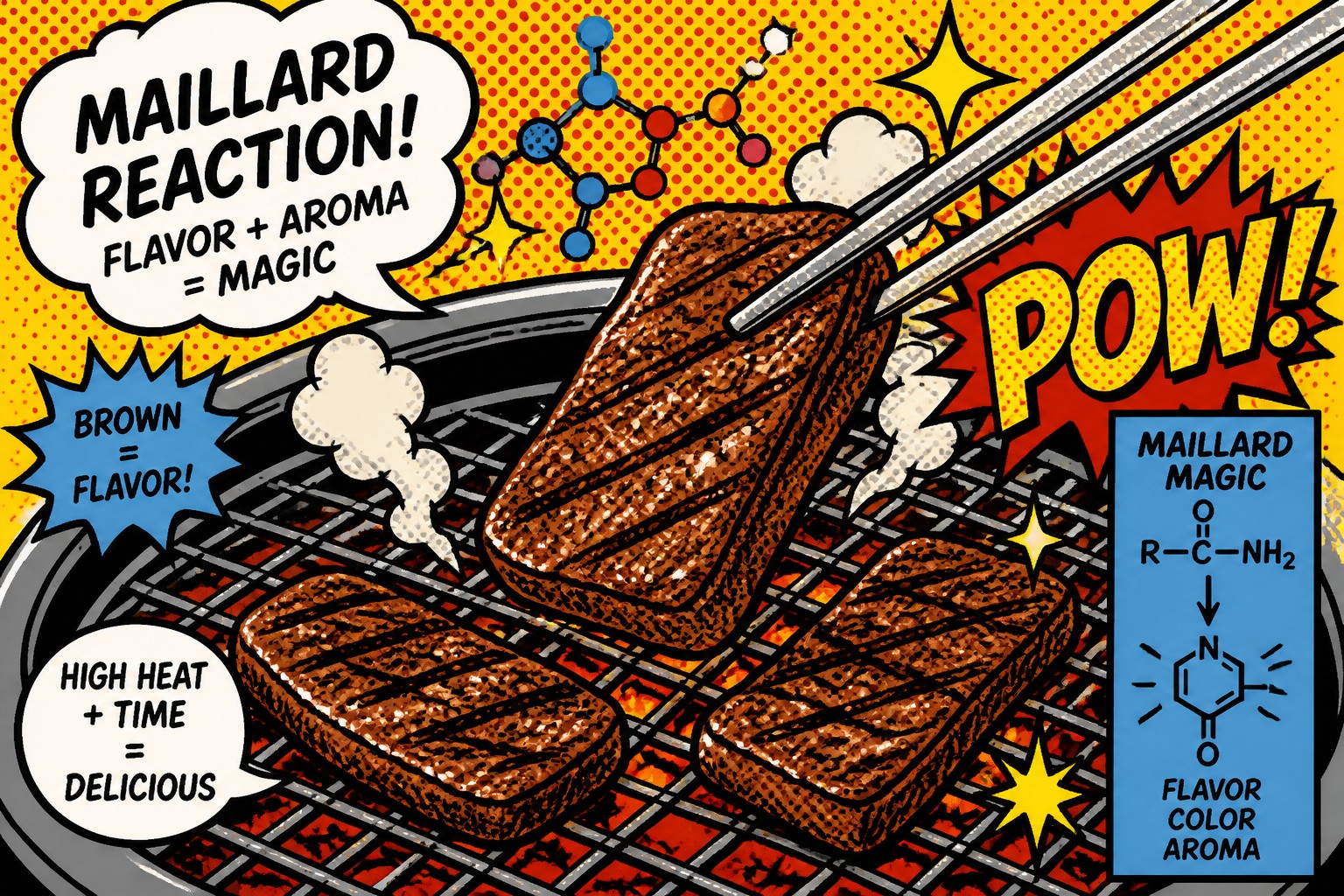
The Maillard reaction is the browning chemistry between amino acids and reducing sugars once a meat surface is hot and dry enough. Classic food science puts efficient browning around the mid-300s °F — well above a steamy, wet surface.
That is why the first second on a crowded tabletop grill often steams instead of sears. Moisture has to leave. Spreading pieces out, preheating the grate, and not overcrowding is more important than maxing the burner for the entire meal.
Marinated galbi adds a twist: sugar in soy-garlic marinades browns fast and then burns. Bitterness is not “extra flavor” — it is carbon. Many Korean BBQ houses grill plain cuts first to season the grate, then move to yangnyeom (marinated) meat, and swap inserts when the surface turns black.
Grill marks are simply Maillard in contact lines. On a tabletop grill they matter less than even browning on both faces. Flip thin LA galbi quickly; thicker steakhouse slices can wait for a deeper crust.
Home tip: pat meat dry, preheat cast iron until a drop of water skitters, and cook in batches. Your kitchen fan is part of the recipe.
Across the Kimchee Network
More from the Kimchee Network